
I get asked this question constantly. Someone lands on one of my reviews, reads through everything, and then hits me with the same follow-up: “But what about Coursera? How does MasterClass compare?” So I figured it was time to write a proper head-to-head. I have used both platforms with real money spent on both. I am not going to pad this out with vague observations. I am going to tell you exactly what each one does well, what it does poorly, how they price their products right now in 2026, and which one makes more sense depending on what you actually want to achieve.
Let me start with the most important thing people get wrong about this comparison.
Content Outline
These Are Two Completely Different Products
MasterClass and Coursera are both online learning platforms. That is roughly where the similarity ends. Comparing them directly is a bit like comparing a documentary series to a university textbook. Both have value. Both teach you things. But they serve very different purposes and attract very different types of learners.
MasterClass is built around storytelling and inspiration. You are watching Gordon Ramsay cook, Malcolm Gladwell explain how he writes, or Sara Blakely walk you through how she built Spanx from nothing. The production quality is cinematic. The lessons are short, watchable, and designed to shift how you think about a subject rather than test your technical knowledge.
Coursera is built around structured, credential-based education. You are working through a syllabus put together by Stanford, Google, IBM, Meta, or one of 300 other universities and companies. There are assignments, quizzes, peer reviews, and certificates that actually carry weight in a job interview. It is closer to taking an actual course than watching a masterfully produced documentary.
Knowing this upfront saves you the frustration of going in with the wrong expectations. I have seen people buy MasterClass expecting Coursera, and others buy Coursera expecting MasterClass. Both end up disappointed, not because the platforms are bad, but because they chose the wrong tool for the job.
Pricing in 2026: Side by Side
Let me get straight to the numbers because this is usually the first thing people want to know.
MasterClass Pricing (2026)
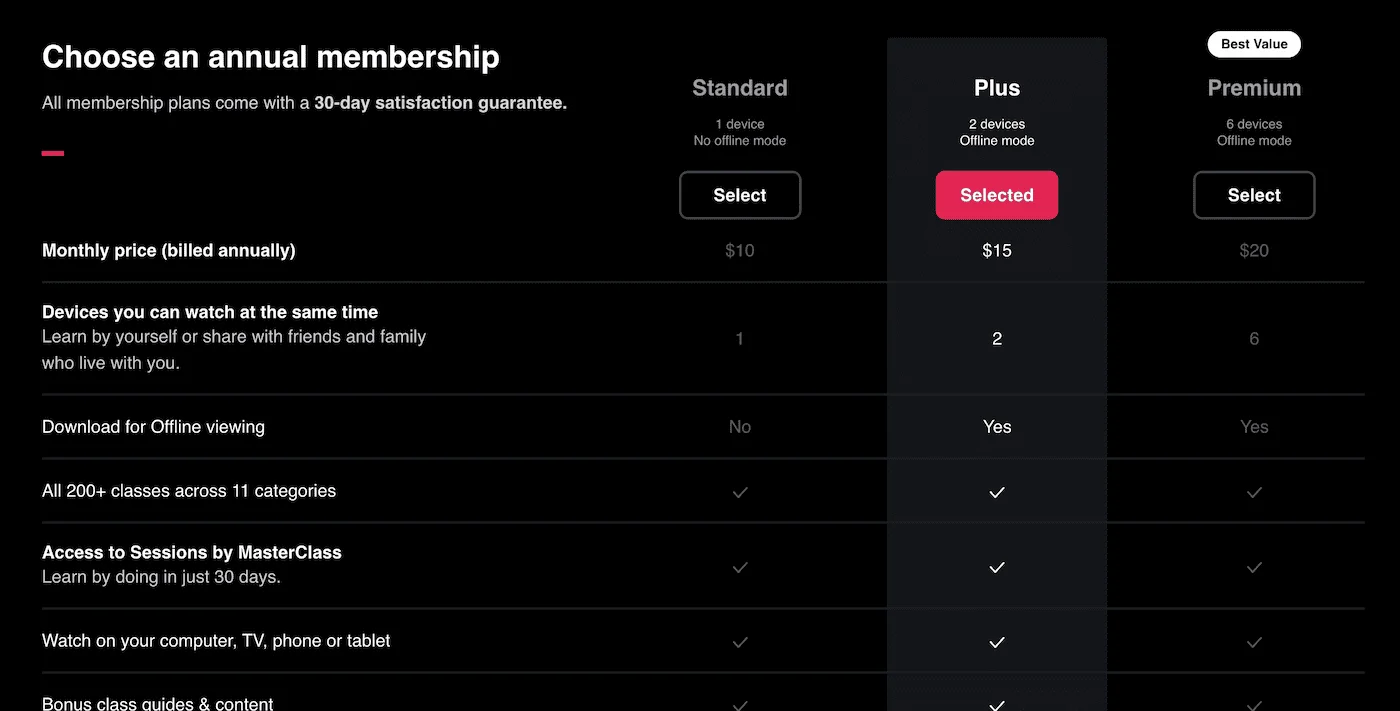
MasterClass is subscription-only. There is no way to pay for a single class. You pay for access to the full library.
The Standard plan costs $10 per month, billed annually at $120 per year. You get one device, no offline mode, and full access to all 200+ classes.
The Plus plan costs $15 per month, billed annually at $180 per year. This is currently their most popular tier. You get two simultaneous devices, offline download mode, and up to six household profiles.
The Premium plan costs $20 per month, billed annually at $240 per year. This is their best value tier. You get six simultaneous devices, offline mode, and up to six profiles. Good for families or small teams.
All three plans come with a 30-day satisfaction guarantee and a 14-day Guest Pass you can send to someone else for a free trial.
Coursera Pricing (2026)
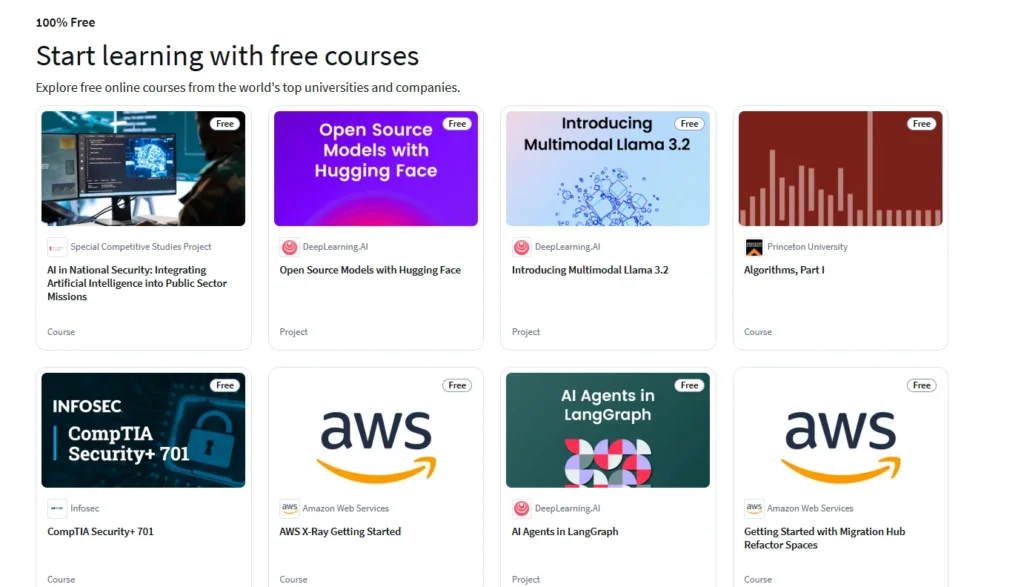
Coursera is more flexible in how it lets you pay, which is both a strength and a source of confusion.
You can audit many courses completely for free, meaning you can watch the video content without paying anything. You just do not get the graded assignments or the certificate. For some people that is enough.
Individual courses cost between $49 and $99 as a one-off purchase, depending on the course. Professional Certificates and Specializations, which are multi-course bundles from companies like Google, Meta, and IBM, run from around $200 to $400 depending on how long they take.
Coursera Plus is their subscription plan, and this is where it gets directly comparable to MasterClass. The monthly plan for Coursera Plus costs $59 per month, with a 7-day free trial included. The annual plan costs $399 per year, which works out to around $33 per month. Coursera Plus gives you unlimited access to over 10,000 courses, Guided Projects, Specializations, and Professional Certificates.
There is currently a promotion running through late September 2026 offering 40% off the monthly plan, bringing it to $35 per month.
Quick Pricing Comparison
MasterClass | Coursera Plus | |
Monthly option | No | $59 per month |
Annual option | $120 to $240 per year | $399 per year |
Free tier | No | Yes (audit only) |
Free trial | 14-day Guest Pass | 7-day free trial |
Money-back guarantee | 30 days | No standard guarantee |
Number of courses | 200+ | 10,000+ |
On pure price, MasterClass wins for the annual plan. $120 per year versus $399 per year is a significant gap. But the value question depends entirely on what you are trying to get out of the platform.
Library Size and Course Quality
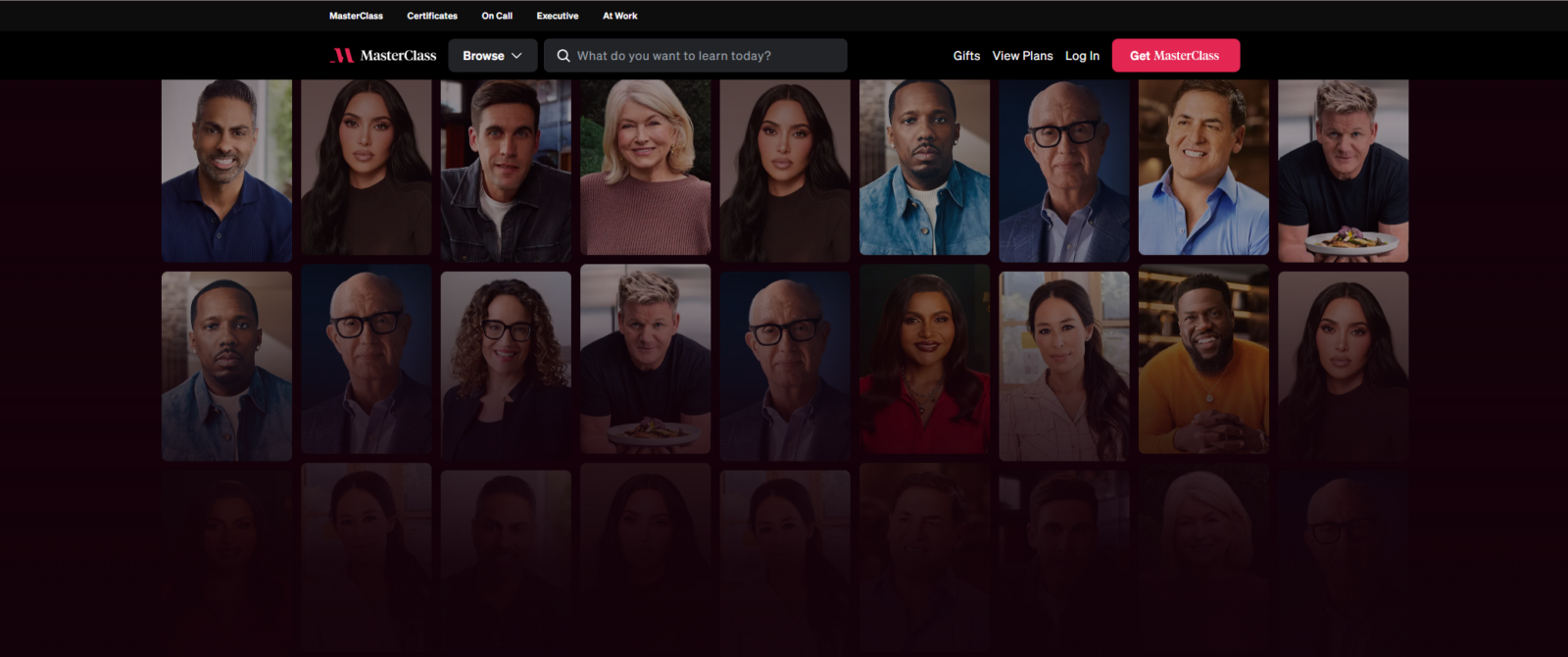
MasterClass has over 200 classes taught by over 200 world-class instructors. New classes are added every month. The library is curated and intentionally small compared to competitors. Every single instructor is a genuine legend in their field. You are not browsing through 50 courses on the same topic taught by random people with varying credentials. You get one class per subject, taught by the best person alive for that subject.
Coursera has over 10,000 courses across virtually every subject imaginable, including business, data science, AI, machine learning, coding, marketing, healthcare, law, and more. The courses come from 300+ universities and companies including Stanford, Yale, Google, IBM, Meta, Duke, Johns Hopkins, and Anthropic. As of 2026, there are also fully accredited online degree programs available through Coursera, including bachelor’s and master’s degrees from real universities. That is something MasterClass cannot come close to offering.
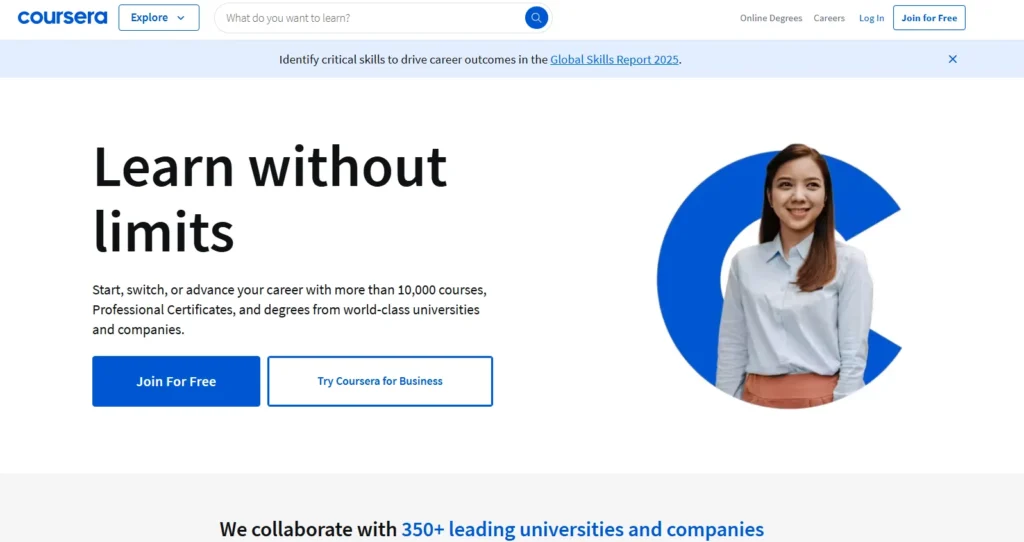
The quality difference comes down to what you mean by quality. MasterClass is consistently the most beautifully produced online content I have seen anywhere. Every class looks expensive and intentional. Coursera is more uneven because it has 10,000 courses from hundreds of different providers. Some are exceptional. Some look like they were filmed on a webcam in 2018. The Google and IBM professional certificates tend to be well produced. University lecture recordings can be dry and visually boring even when the content is excellent.
What You Actually Learn: Depth vs Inspiration
This is the core difference and the thing that should drive your decision more than anything else.
MasterClass teaches you how to think. You come away from a class with a new perspective, a sharpened instinct, or a mindset shift. Malcolm Gladwell does not give you a 10-step checklist for writing a bestseller. He shows you how he thinks about stories, readers, and ideas. That is genuinely valuable, but it is a different kind of value than a step-by-step technical course.
Coursera teaches you how to do. You come away from a Google Data Analytics certificate knowing how to use SQL, spreadsheets, Tableau, and R for real data analysis tasks. You come away from a Meta Marketing Analytics course knowing how to build and measure actual ad campaigns. The learning is structured, assessed, and tied to specific job-ready skills.
From my affiliate marketing background, I use both types of learning. I use MasterClass for writing, persuasion, storytelling, and business thinking. These are the skills that make my content better and my pitches sharper. I use Coursera when I need to actually learn a technical skill from scratch, like the time I worked through a digital marketing specialisation to get more rigorous about the analytics side of what I do.
If you can only pick one, ask yourself this question: do you need to think differently, or do you need to do something differently? If the answer is think, go MasterClass. If the answer is do, go Coursera.
Certificates and Career Value
This is where Coursera has a clear and unambiguous advantage.
Coursera certificates, particularly the Google Career Certificates, IBM Professional Certificates, and Meta certifications, are genuinely recognised by employers. Google’s own job listings reference the Google Career Certificate as an accepted credential. These are not participation trophies. They represent 150 to 200 hours of structured learning with graded assessments that prove you can actually do the work.
Coursera also offers fully accredited online degrees from real universities. If you want an online Master’s in Data Science from a legitimate institution, Coursera is one of the few places you can actually get that done.
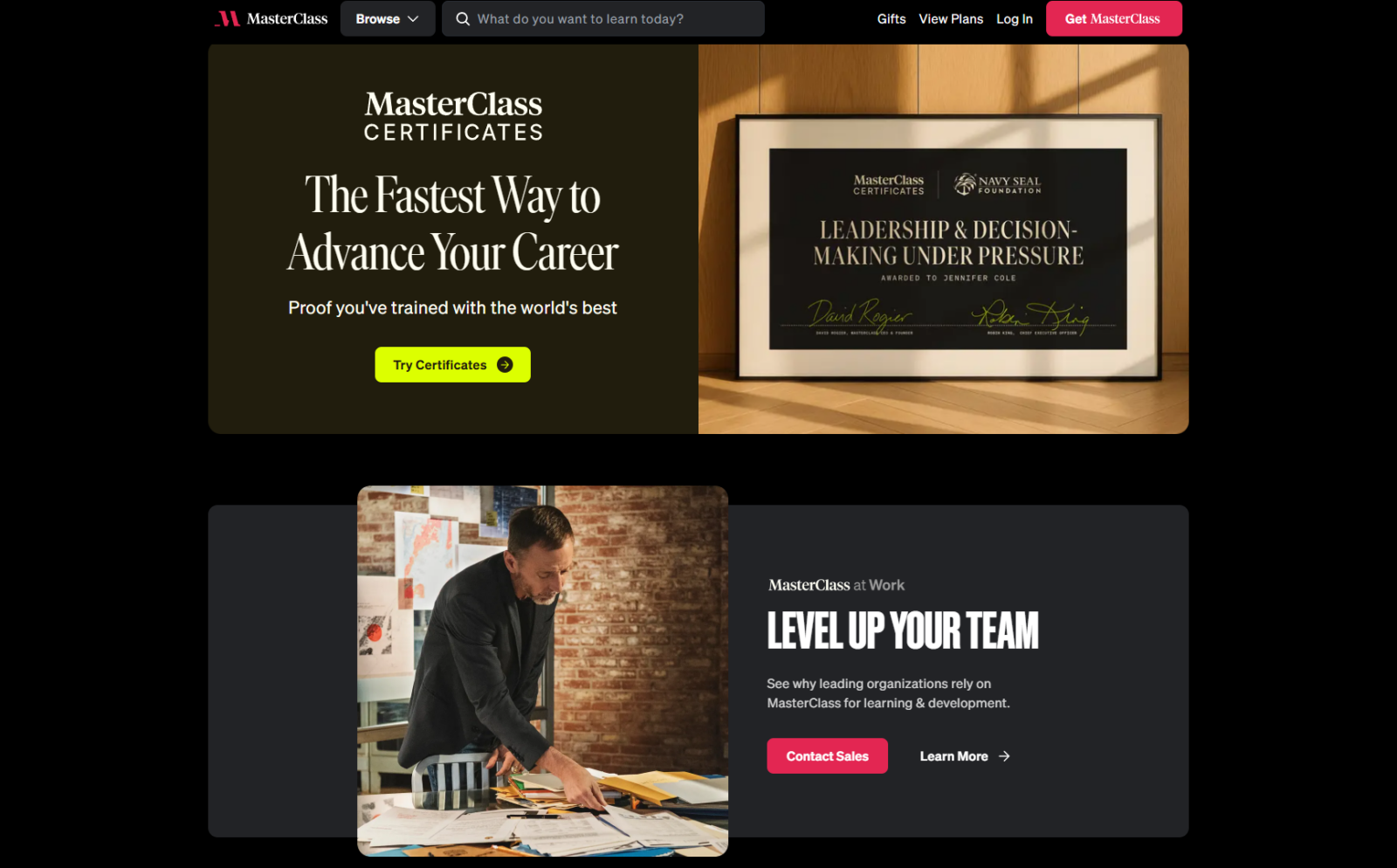
MasterClass certificates exist in the sense that you can mark a class as completed, but nobody is putting a MasterClass completion badge on their LinkedIn profile and getting calls from recruiters about it. The value of MasterClass is not credential-based. It is skill and mindset-based. That is fine for people who already have established careers or businesses. It is less useful if you are trying to get your first job in a technical field.
Best Courses on Each Platform
For affiliate marketers and content creators, here are the specific courses I would point you toward on each platform.
On MasterClass, the courses that deliver the most direct value for someone in digital marketing or affiliate work are Daniel Pink Teaches Sales and Persuasion, Chris Voss Teaches the Art of Negotiation, Malcolm Gladwell Teaches Writing, Sara Blakely Teaches Self-Made Entrepreneurship, Bob Iger Teaches Business Strategy and Leadership, and Shonda Rhimes Teaches Writing for Television. These build the foundational skills that sit underneath everything else you do professionally.
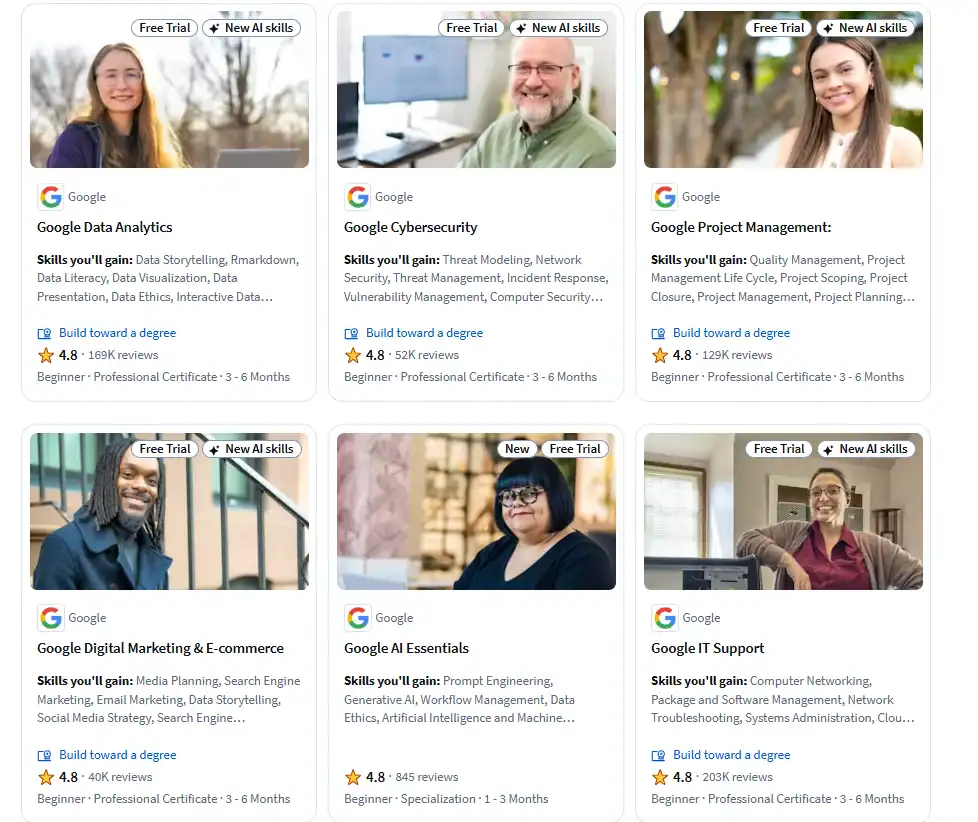
On Coursera, the courses worth your time if you are in affiliate marketing or content business include the Google Digital Marketing and E-commerce Professional Certificate, the Meta Marketing Analytics Professional Certificate, the IBM Data Analyst Professional Certificate, the DeepLearning.AI courses on AI and machine learning which are increasingly relevant to content strategy, and the University of Pennsylvania’s Business Foundations Specialisation for anyone who wants stronger business fundamentals. As of 2026, Coursera also has content from Anthropic on AI, which is worth exploring if you are trying to stay ahead on how AI tools are changing content creation.
Ease of Use and Platform Experience
MasterClass has a cleaner, more enjoyable interface. Browsing feels effortless. The app is well designed on both mobile and desktop. Audio-only mode works smoothly. Offline downloads on the Plus and Premium plans are straightforward. The overall experience feels premium from the moment you log in.
Coursera is more functional than beautiful. The platform is built to handle complexity, assignments, deadlines, peer reviews, and certificates, and all of that infrastructure makes it feel more like a learning management system than a consumer app. It works well but it is not the most enjoyable experience to browse casually. You tend to enrol in a specific course or certificate track and stay there rather than exploring freely.
The Affiliate Program Angle
Since this is something I care about professionally, let me break down both affiliate programs.
MasterClass pays up to 25% commission per sale on new memberships through ShareASale. At $120 per year for the Standard plan that is $30 per conversion. At $240 for Premium that is $60. The cookie window is 30 days. There is no minimum payout. The Guest Pass is a powerful promotional tool because you can offer a 14-day free trial rather than asking for a direct purchase.
Coursera pays baseline commissions of 15% to 45% depending on the product type through its own affiliate program. The range is wider because Coursera sells more types of products including individual courses, certificates, specialisations, and degree programs. The cookie window is also 30 days. The higher price point of Coursera Plus at $399 per year means a 25% commission would be nearly $100 per conversion, which is significant.
For pure commission potential, Coursera can pay more per transaction simply because the average order value is higher. But MasterClass tends to be easier to promote because the brand is more recognisable in general consumer audiences and the Guest Pass makes the conversion funnel softer. Coursera converts better with audiences actively seeking career development or job-ready skills.
Personally I promote both, but to different audiences. MasterClass content goes toward my audience of entrepreneurs, content creators, and self-improvement oriented readers. Coursera content goes toward readers who are actively looking to switch careers or get certified in a technical skill.
Who Should Choose MasterClass?
MasterClass is the right choice if you are a content creator, blogger, or affiliate marketer who wants to sharpen writing and persuasion skills. It also works well for entrepreneurs and business owners who value mindset-level learning from the best in the world. If you enjoy learning the same way you enjoy a well-made documentary and you want to pick things up at your own pace without assignments or deadlines, MasterClass fits naturally into your routine. The price point starting at $120 per year is also genuinely accessible.
Who Should Choose Coursera?
Coursera is the right choice if you need a credential that employers will actually recognise. It is also the better platform if you are learning a technical skill from scratch, whether that is data analysis, digital marketing, machine learning, or programming. If you are a student, a career changer, or someone who needs structured accountability with deadlines and graded work, Coursera is built for exactly that. The free audit option also makes it possible to try a course before spending anything, which is a genuine advantage.
Final Verdict
Both platforms are worth using. They are just worth using for different things. If I had to keep only one, it would depend entirely on where I am in my career. In the early days when I needed to learn specific technical skills and get credentials that opened doors, Coursera would have won. Right now, as someone running an established content business, MasterClass delivers more day-to-day value for the way I actually work.
The smartest move if your budget allows is to have MasterClass on an annual Standard plan at $120 per year running continuously, and to dip into Coursera on a monthly basis at $59 per month specifically when you need to learn a hard skill or earn a certificate. That way you get the best of both without paying for Coursera Plus annually when you may only need it for three or four months.
Quick Summary Table
Category | MasterClass | Coursera Plus |
Starting price | $120 per year ($10 per month) | $399 per year or $59 per month |
Free option | No | Yes (audit only) |
Free trial | 14-day Guest Pass | 7-day free trial |
Number of courses | 200+ | 10,000+ |
Instructor quality | World-class celebrities and legends | Universities and major companies |
Certificates | Completion only | Industry-recognised credentials |
Degrees available | No | Yes |
Offline access | Plus and Premium plans only | Yes on app |
Best for | Inspiration, mindset, writing, storytelling | Technical skills, career credentials |
Affiliate commission | Up to 25% via ShareASale | 15% to 45% via Coursera program |
Money-back guarantee | 30 days | No standard guarantee |
FAQs
Coursera offers better value if you want accredited certificates or job-ready skills, since plans start cheaper and include university-backed courses. MasterClass is worth it mainly for inspiration and entertainment from celebrity instructors, not career credentials.
MasterClass focuses on creative and lifestyle skills taught by celebrities in a documentary-style format, while Coursera offers structured, university-level courses with certificates, quizzes, and career-focused specializations. Coursera is built for learning outcomes; MasterClass is built for entertainment and inspiration.
No, MasterClass does not offer certificates or accredited credentials, only completion badges for personal tracking. Coursera provides shareable certificates, professional certificates, and even degrees from real universities.
MasterClass runs an annual subscription around $120-180 per year with unlimited access to all classes. Coursera offers free courses, a Coursera Plus subscription near $59/month or $399/year, plus separate pricing for Specializations and degree programs.
People choose MasterClass for high-production-value classes taught by famous experts in fields like cooking, writing, or acting, purely for enjoyment and motivation. It's less about certification and more about learning from someone you admire in an engaging format.
